Can You Really Make Money With Dropshipping? The Hidden Costs, Membership Fees, and Truth Behind Online Business Success Stories
Read this article in EN English ML മലയാളത്തിൽ വായിക്കുക Malayalam ReaderRead naturally, reveal more as you go Englishമലയാളം Can You Really Make Money With Dropshipping? The Hidden Costs, Membership Fees, and Truth Behind Online…
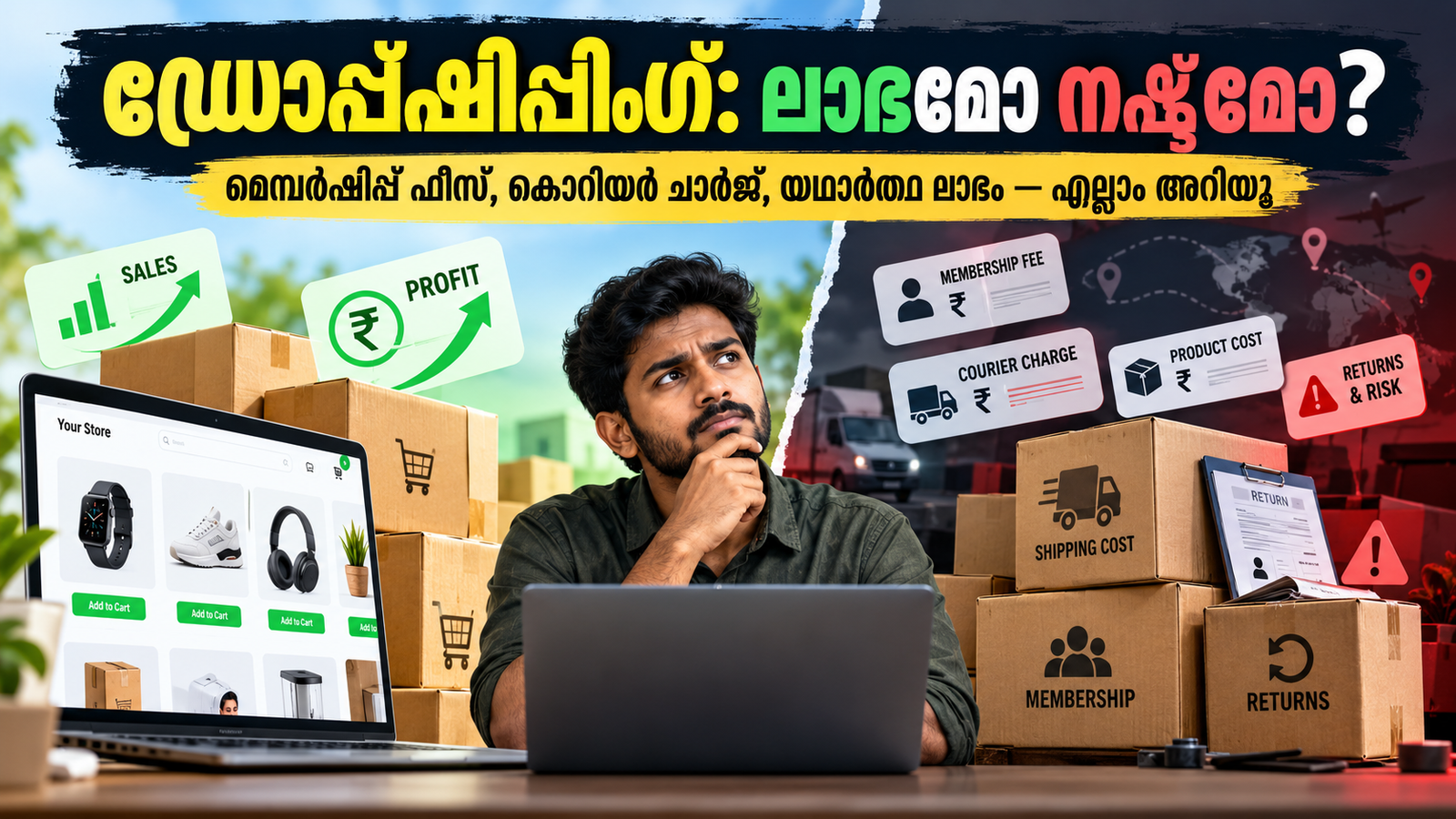
Can You Really Make Money With Dropshipping? The Hidden Costs, Membership Fees, and Truth Behind Online Business Success Stories
Start a business without inventory. Earn money from home. Sell products without investing in stock. These promises have made dropshipping one of the most talked-about online business opportunities. But behind the success stories, one important question remains: Are ordinary resellers actually making a profit?
Dropshipping has become increasingly popular across India, particularly among people looking for a business they can start from home.
Social media platforms such as YouTube, Facebook, and Instagram are filled with videos explaining how anyone can launch an online store, sell products, and generate income without maintaining inventory.
Some content creators share impressive sales dashboards, large order numbers, and stories of financial success.
For students, homemakers, unemployed individuals, and aspiring entrepreneurs, these opportunities can appear highly attractive.
However, there is another side to the dropshipping business that deserves more attention.
What happens when the products offered by dropshipping suppliers are already available at lower prices on popular shopping platforms?
Why do some suppliers charge monthly or annual membership fees when resellers are already helping them sell their products?
And most importantly, how much money does a reseller actually earn after paying for shipping, advertising, returns, and other expenses?
Let’s examine the economics behind these questions.
What Is Dropshipping, and How Does It Really Work?
Dropshipping is an e-commerce business model in which a seller markets products without keeping physical inventory.
When a customer places an order, the seller forwards that order to a supplier. The supplier then ships the product directly to the customer.
The seller generally earns the difference between the selling price and the total cost of fulfilling the order.
For example, if a supplier provides a product for ₹200 and the seller successfully sells it for ₹350, the difference is ₹150.
However, that ₹150 is not necessarily profit.
Shipping fees, packaging, payment processing, marketing expenses, returns, and other operating costs must still be considered.
This is where the seemingly simple dropshipping business model becomes more complicated.
The real opportunity in dropshipping is not simply finding products to sell. It is finding products that can be sold profitably after every expense is included.
The Biggest Question: Are Dropshipping Suppliers Really Offering Wholesale Prices?
One of the main reasons entrepreneurs approach dropshipping suppliers is the expectation of receiving products at competitive wholesale prices.
Unfortunately, that expectation does not always match reality.
Some products advertised through dropshipping platforms may also be available on retail marketplaces such as Meesho, Amazon, or Flipkart at similar or even lower prices.
Consider a hypothetical example.
A dropshipping supplier lists a kitchen product for ₹300.
The same or a comparable product is available to consumers on Meesho for ₹260.
The reseller must now decide how much to charge.
If the reseller sells it for ₹350, the available margin may not even cover delivery charges.
If the reseller sells it for ₹450, customers may discover a similar product elsewhere for significantly less.
This creates a fundamental business problem.
If customers can purchase the same product directly from a large online marketplace at a lower price, what compelling reason do they have to purchase it from a reseller?
A reseller may still compete through branding, service, convenience, product quality, or customer trust. But those advantages must be meaningful enough to justify the difference.
Simply having access to a product catalogue is not a competitive advantage.
Shipping Charges Can Destroy Your Profit Margin
Shipping is one of the most underestimated expenses in dropshipping.
Large e-commerce platforms may benefit from logistics agreements, shipping volumes, distribution networks, and operational efficiencies that smaller businesses cannot easily match.
Individual dropshippers may face considerably higher delivery costs.
For example, some small suppliers may charge ₹100–₹120 or more to ship a single package, depending on weight, destination, service, and payment method.
Consider the following illustration:
| Expense | Amount |
|---|---|
| Supplier product price | ₹250 |
| Shipping charge | ₹110 |
| Packaging and miscellaneous costs | ₹20 |
| Total cost | ₹380 |
| Customer selling price | ₹449 |
| Amount remaining | ₹69 |
At first glance, the reseller appears to make ₹69.
But this is not the final profit.
Advertising, payment gateway charges, returned orders, membership subscriptions, and customer service expenses have not yet been deducted.
A single unsuccessful order could wipe out the earnings from several successful orders.
These numbers are illustrative; actual supplier costs vary.
This raises another important question:
Is dropshipping profitable when the supplier’s shipping charges are already consuming a large portion of the potential margin?
Why Do Some Dropshipping Companies Charge Membership Fees?
This is perhaps one of the most important questions aspiring resellers should ask.
Several dropshipping platforms charge monthly or yearly fees to access their product catalogues and services.
Some offer membership benefits such as:
- Special product discounts of 10%–20%.
- Store-building software and order management.
- Training and technical assistance.
- Customer support and logistics integration.
- Product sourcing and fulfilment services.
Charging a fee for genuine services is not inherently unreasonable.
Technology, support staff, inventory management, and platform maintenance all involve costs.
However, the value of a membership must be evaluated against the benefits it actually provides.
Consider a supplier that charges a membership fee but offers products at prices comparable to or higher than those found on public shopping platforms.
If members receive no meaningful price advantage or additional service, what exactly are they paying for?
A reseller is already helping the supplier generate sales by finding customers and promoting the supplier’s products.
The supplier earns revenue when those products are purchased.
If resellers are already contributing customers, sales, and marketing efforts, why should they also pay a membership fee without receiving a clear economic benefit in return?
That does not automatically make the arrangement fraudulent.
But it makes transparency essential.
Before charging aspiring entrepreneurs for access, suppliers should clearly explain what members receive and how those services improve their chances of operating a profitable business.
A 20% Discount Does Not Always Mean a Good Deal
Discount percentages can be misleading when they are not compared with actual market prices.
Imagine a supplier lists a product at ₹500 and offers members a 20% discount.
The member pays ₹400.
That sounds attractive.
But what if a comparable product is available on another marketplace for ₹330?
The advertised 20% discount does not automatically make the supplier’s price competitive.
What matters is the final delivered cost, not the discount percentage.
Before joining a subscription-based dropshipping platform, resellers should compare actual prices across multiple suppliers and marketplaces.
Are Some Companies Making More Money From Memberships Than Their Resellers Make From Sales?
This is a question worth investigating, rather than assuming an answer.
Suppose a platform has 1,000 paying members, each paying ₹999 per month.
That would generate approximately ₹9.99 lakh in monthly gross membership revenue.
The company would still have operating expenses, so the amount would not represent its net profit.
But the calculation highlights an important distinction.
A dropshipping platform may generate income from membership fees regardless of whether every reseller earns money.
That makes it reasonable to ask:
How many paying members actually generate consistent net profits from selling products?
How many recover their membership fees?
How many continue operating after six months?
Without reliable data, sales success stories alone cannot answer these questions.
A sustainable dropshipping ecosystem should create genuine value for both the supplier and the reseller.
Sales Revenue Is Not the Same as Business Profit
Social media videos sometimes highlight impressive revenue figures without showing complete operating expenses.
A screenshot showing ₹1 lakh in sales can look convincing.
But it does not reveal how much money was spent generating those sales.
Consider another hypothetical example:
| Business Activity | Amount |
|---|---|
| Total sales revenue | ₹1,00,000 |
| Product purchasing costs | ₹60,000 |
| Shipping and packaging | ₹15,000 |
| Advertising | ₹15,000 |
| Returns and other expenses | ₹7,000 |
| Remaining profit | ₹3,000 |
A business could generate ₹1 lakh in sales while retaining only ₹3,000 before any additional costs or taxes not included in this example.
In less favourable circumstances, it could operate at a loss.
This is why aspiring entrepreneurs should be cautious about judging success based on revenue screenshots.
A successful business is not measured only by how much it sells, but by how much it retains after expenses.
Returns and Cash on Delivery: The Hidden Financial Risk
Returns can become particularly expensive in dropshipping.
Consider the situation where a customer places a Cash on Delivery order but refuses delivery.
Who pays the shipping charge?
Who covers the return-to-origin cost?
What happens when a product arrives damaged?
Who handles refunds and replacements?
The answer depends on the supplier’s terms and the agreements between the parties.
If a reseller earns ₹50 on each successful sale but loses ₹150 on a returned order, one return may eliminate the profit from three successful sales.
Anyone entering dropshipping should understand these liabilities before committing money to a supplier.
The Problem With Easy-Money Promises on Social Media
There is nothing wrong with sharing legitimate business success stories.
However, income-related claims should provide realistic context.
Dropshipping requires time, marketing knowledge, customer service, pricing discipline, supplier management, and financial planning.
It is not automatically a source of passive income.
When influencers present impressive earnings without explaining costs or risks, viewers may develop unrealistic expectations.
For someone investing limited savings, these expectations can have real consequences.
Responsible business education should discuss not only successful orders and revenue but also advertising losses, failed products, returns, fulfilment problems, and the challenges of finding customers.
Potential resellers deserve a complete picture before paying membership fees or purchasing courses.
Is Every Dropshipping Platform a Scam?
No.
Dropshipping is a legitimate business model used in different forms by online retailers.
Many suppliers provide real products, logistics services, software, fulfilment support, and useful wholesale arrangements.
Membership fees can also be commercially justified when they pay for services that offer genuine value.
The concern arises when marketing promises are disconnected from the actual economics of the business.
High product prices, expensive delivery, hidden charges, unclear return policies, and unrealistic income claims deserve scrutiny.
It is important to distinguish between a difficult or unprofitable business opportunity and a proven fraudulent scheme.
Allegations against specific companies should be supported by verifiable evidence.
How Can You Actually Make Money With Dropshipping?
Dropshipping can be profitable, but it requires careful planning and a clear understanding of the market.
1. Choose Products With Genuine Demand
Research products that customers actively want and identify how your offering differs from competing listings.
2. Compare Multiple Suppliers
Never assume the first supplier is offering the best wholesale price.
Compare product quality, fulfilment costs, delivery times, and return conditions.
3. Calculate the Complete Cost Per Order
Include product costs, shipping, packaging, marketing, payment charges, taxes where applicable, and expected return losses.
A product with an attractive selling price may still generate a loss.
4. Start Small Before Paying Large Membership Fees
Test product quality and customer demand through a small number of sample orders before committing to an expensive annual subscription.
5. Evaluate Membership Benefits Carefully
Ask suppliers to explain exactly what the fee covers.
If the membership promises discounts, compare the final prices with those offered by other suppliers.
6. Build Customer Trust
Accurate descriptions, reliable delivery, good support, and transparent refund policies can help a small online store compete.
7. Focus on Net Profit, Not Order Numbers
Monitor what you actually earn after expenses.
Revenue growth is valuable only when the underlying business remains financially sustainable.
Questions Every Beginner Should Ask Before Joining a Dropshipping Platform
Before paying a supplier or joining a membership programme, consider these questions:
- Why is a membership fee required?
- What specific services or financial advantages does it provide?
- Are the products cheaper than comparable listings on retail marketplaces?
- What is the total shipping cost?
- Who pays when an order is returned?
- Are there additional charges for COD, packaging, or payment processing?
- Can the business demonstrate realistic profitability rather than only sales volume?
If the answers are unclear, it may be wiser to continue researching rather than immediately paying for access.
Final Thoughts: Are You Building Your Business or Someone Else’s?
Dropshipping can provide an opportunity to start an online business without maintaining inventory.
But the absence of inventory does not eliminate financial risk.
Aspiring entrepreneurs may still invest money in marketing, memberships, software, shipping, and customer acquisition.
Meanwhile, suppliers earn revenue when their products are sold.
A fair and sustainable business model should offer value to both sides.
When a supplier benefits from the reseller’s effort, the reseller should also have a realistic opportunity to earn a reasonable profit.
The most important question is not whether someone can make money selling dropshipping courses or memberships. It is whether the ordinary person paying to become a dropshipper can build a genuinely profitable business.
Before buying a dream of easy income, examine the numbers.
Because in the real world of business, profit matters more than promises.
Editorial note: This article is an independent discussion of dropshipping economics and common business risks. It does not accuse any particular company or individual of wrongdoing. All numerical examples are hypothetical and intended for explanation.
മുതൽമുടക്കില്ലാതെ ബിസിനസ്, സ്റ്റോക്ക് വാങ്ങാതെ വിൽപ്പന, വീട്ടിലിരുന്ന് ആയിരങ്ങൾ സമ്പാദിക്കാം! ഡ്രോപ്പ്ഷിപ്പിംഗ് എന്ന പേരിൽ പ്രചരിക്കുന്ന ഈ വാഗ്ദാനങ്ങൾ വിശ്വസിച്ച് പണം മുടക്കുന്നതിന് മുമ്പ് ചില കാര്യങ്ങൾ അറിഞ്ഞിരിക്കണം.
ഇന്ന് സോഷ്യൽ മീഡിയയിൽ ഏറ്റവും കൂടുതൽ ചർച്ച ചെയ്യപ്പെടുന്ന ഓൺലൈൻ ബിസിനസ് ആശയങ്ങളിൽ ഒന്നാണ് ഡ്രോപ്പ്ഷിപ്പിംഗ്.
YouTube, Facebook, Instagram തുടങ്ങിയ പ്ലാറ്റ്ഫോമുകൾ തുറന്നാൽ ഡ്രോപ്പ്ഷിപ്പിംഗ് വഴി വലിയ വരുമാനം നേടിയെന്ന അവകാശവാദങ്ങളുമായി നിരവധി വീഡിയോകൾ കാണാം.
“മൊബൈൽ മാത്രം മതി”, “കട തുടങ്ങേണ്ട”, “ഉൽപ്പന്നങ്ങൾ വാങ്ങി സൂക്ഷിക്കേണ്ട”, “ദിവസവും ആയിരങ്ങൾ സമ്പാദിക്കാം” എന്നിങ്ങനെ നിരവധി ആകർഷകമായ വാഗ്ദാനങ്ങൾ.
ഇതെല്ലാം കേൾക്കുമ്പോൾ സ്വന്തമായി ചെറിയൊരു ബിസിനസ് തുടങ്ങണമെന്ന് ആഗ്രഹിക്കുന്ന ഏതൊരാൾക്കും ഡ്രോപ്പ്ഷിപ്പിംഗ് മികച്ച അവസരമാണെന്ന് തോന്നാം.
എന്നാൽ ഇവിടെ ഒരു പ്രധാന ചോദ്യം ഉയരുന്നു.
ഡ്രോപ്പ്ഷിപ്പിംഗ് വഴി എല്ലാവർക്കും പണമുണ്ടാക്കാൻ കഴിയുമെങ്കിൽ, അതിൽ ചേർന്ന് ബിസിനസ് ആരംഭിക്കുന്ന സാധാരണക്കാരിൽ എത്ര പേർക്ക് യഥാർത്ഥത്തിൽ ലാഭം ലഭിക്കുന്നുണ്ട്?
ഈ ചോദ്യത്തിനുള്ള ഉത്തരം അന്വേഷിക്കുമ്പോഴാണ് ഡ്രോപ്പ്ഷിപ്പിംഗിന്റെ മറ്റൊരു മുഖം വ്യക്തമാകുന്നത്.
ഡ്രോപ്പ്ഷിപ്പിംഗ് എന്താണ്? യഥാർത്ഥത്തിൽ എങ്ങനെയാണ് ലാഭമുണ്ടാക്കുന്നത്?
സ്വന്തമായി ഉൽപ്പന്നങ്ങൾ സ്റ്റോക്ക് ചെയ്യാതെ ഉപഭോക്താക്കൾക്ക് വിൽക്കാൻ കഴിയുന്ന ഒരു ഇ-കൊമേഴ്സ് ബിസിനസ് രീതിയാണ് ഡ്രോപ്പ്ഷിപ്പിംഗ്.
ഉദാഹരണത്തിന്, ഒരു വിതരണക്കാരന്റെ കൈവശമുള്ള ഉൽപ്പന്നം നിങ്ങൾ സ്വന്തം വെബ്സൈറ്റിലോ സോഷ്യൽ മീഡിയ പേജിലോ ലിസ്റ്റ് ചെയ്യുന്നു.
ഒരു ഉപഭോക്താവ് ഓർഡർ നൽകുമ്പോൾ വിതരണക്കാരൻ നേരിട്ട് ആ ഉൽപ്പന്നം ഉപഭോക്താവിന് അയയ്ക്കുന്നു.
നിങ്ങൾക്ക് ലഭിക്കുന്ന വിൽപ്പനത്തുകയും ഉൽപ്പന്നം വാങ്ങുന്നതിനും എത്തിക്കുന്നതിനുമുള്ള ആകെ ചെലവും തമ്മിലുള്ള വ്യത്യാസത്തിലാണ് ലാഭത്തിനുള്ള അവസരം.
കേൾക്കുമ്പോൾ വളരെ ലളിതമാണ്.
പക്ഷേ യഥാർത്ഥ ബിസിനസിൽ അത്ര ലളിതമല്ല.
കാരണം ഉൽപ്പന്നവില മാത്രമല്ല, കൊറിയർ ചാർജ്, പാക്കിങ്, പരസ്യച്ചെലവ്, റിട്ടേൺ, റീഫണ്ട്, പേയ്മെന്റ് ഫീസ് തുടങ്ങിയവയും പരിഗണിക്കണം.
മൊത്തവില ലഭിക്കുന്നില്ലെങ്കിൽ പിന്നെ എന്താണ് ഡ്രോപ്പ്ഷിപ്പിംഗിന്റെ നേട്ടം?
ഇതാണ് ഇന്ന് പലരും ചോദിക്കേണ്ട ഏറ്റവും പ്രധാനപ്പെട്ട ചോദ്യം.
ചില ഡ്രോപ്പ്ഷിപ്പിംഗ് പ്ലാറ്റ്ഫോമുകളിൽ ലഭിക്കുന്ന ഉൽപ്പന്നങ്ങൾ പരിശോധിക്കുമ്പോൾ, അതേ ഉൽപ്പന്നങ്ങളോ സമാനമായ ഉൽപ്പന്നങ്ങളോ Meesho പോലെയുള്ള സാധാരണ ഷോപ്പിംഗ് പ്ലാറ്റ്ഫോമുകളിൽ കുറഞ്ഞ വിലയ്ക്ക് ലഭിക്കുന്നതായി കാണാം.
ഒരു ഉദാഹരണം നോക്കാം.
ഒരു ഡ്രോപ്പ്ഷിപ്പിംഗ് കമ്പനിയിൽ ഒരു ഉൽപ്പന്നത്തിന്റെ വില ₹300 ആണെന്ന് കരുതുക.
അതേ ഉൽപ്പന്നം Meesho-യിൽ ഉപഭോക്താവിന് ₹260-ന് ലഭിക്കുന്നുവെങ്കിൽ, ഒരു പുതിയ സംരംഭകന് ₹300-ന് വാങ്ങുന്ന ഉൽപ്പന്നം എത്ര രൂപയ്ക്ക് വിൽക്കാൻ കഴിയും?
₹350-ന് വിറ്റാൽ കൊറിയർ ചെലവ് പോലും കഴിഞ്ഞേക്കില്ല.
₹450-ന് വിറ്റാൽ അതേ ഉൽപ്പന്നം മറ്റൊരിടത്ത് ₹260-ന് ലഭിക്കുമ്പോൾ ഉപഭോക്താവ് എന്തിന് കൂടുതൽ പണം നൽകണം?
ബ്രാൻഡിങ്, ഗുണനിലവാരം, മികച്ച സേവനം തുടങ്ങിയവയ്ക്ക് ഉപഭോക്താവ് അധികം നൽകാൻ തയ്യാറാകാം. എന്നാൽ അതിനുള്ള വ്യക്തമായ മൂല്യം സൃഷ്ടിക്കാൻ കഴിയണം.
ഒരു ഉൽപ്പന്നം ഡ്രോപ്പ്ഷിപ്പിംഗിനായി ലഭിക്കുന്നു എന്നതുകൊണ്ട് മാത്രം അത് മൊത്തവിലയ്ക്ക് ലഭിക്കുന്നു എന്നർത്ഥമില്ല.
കൊറിയർ ചാർജ്: ചെറിയ സംരംഭകരുടെ ലാഭം ഇല്ലാതാക്കുന്ന മറ്റൊരു പ്രശ്നം
വലിയ ഇ-കൊമേഴ്സ് പ്ലാറ്റ്ഫോമുകൾക്ക് ഉയർന്ന ഓർഡർ വോള്യവും ലോജിസ്റ്റിക്സ് കരാറുകളും വഴി ചില ചെലവുകൾ കുറയ്ക്കാൻ സാധിക്കും.
എന്നാൽ ചെറുകിട ഡ്രോപ്പ്ഷിപ്പിംഗ് സംരംഭകർക്ക് അതേ നിരക്കുകൾ ലഭിക്കണമെന്നില്ല.
ചില വിതരണക്കാരിൽ ഒരു പാർസലിന് ₹100–₹120 അല്ലെങ്കിൽ അതിലധികം കൊറിയർ ചാർജ് നൽകേണ്ട സാഹചര്യമുണ്ടാകാം.
ഒരു ഉദാഹരണ കണക്ക് പരിശോധിക്കാം.
| ചെലവ് | തുക | |—|—:| | ഉൽപ്പന്നവില | ₹250 | | കൊറിയർ ചാർജ് | ₹110 | | പാക്കിങ് / മറ്റു ചെലവ് | ₹20 | | ആകെ ചെലവ് | ₹380 | | വിൽപ്പനവില | ₹449 | | ബാക്കിയുള്ള തുക | ₹69 |
ഈ ₹69 പോലും അറ്റാദായമല്ല.
പരസ്യച്ചെലവ്, പേയ്മെന്റ് ചാർജ്, റിട്ടേൺ നഷ്ടം, മെമ്പർഷിപ്പ് ഫീസ് എന്നിവ ഇനിയും കുറയ്ക്കാനുണ്ട്.
ഒരു ഓർഡർ റിട്ടേൺ ആയാൽ ഒന്നിലധികം വിജയകരമായ ഓർഡറുകളുടെ ലാഭം നഷ്ടപ്പെടുന്ന സാഹചര്യം പോലും ഉണ്ടാകാം.
ഇവിടെ ചോദിക്കേണ്ടത്:
ഉൽപ്പന്നം വിറ്റാൽ മാത്രം പോരല്ലോ. എല്ലാ ചെലവും കഴിഞ്ഞ് കൈയിൽ എത്ര രൂപ ലഭിക്കും?
സ്വന്തം ഉൽപ്പന്നങ്ങൾ വിറ്റുകൊടുക്കുന്നവരിൽ നിന്ന് മെമ്പർഷിപ്പ് ഫീസ് വാങ്ങുന്നത് എന്തിനാണ്?
ഇതാണ് ഡ്രോപ്പ്ഷിപ്പിംഗ് മേഖലയിലെ മറ്റൊരു പ്രധാന ചർച്ചാവിഷയം.
ഇന്ന് ചില കമ്പനികൾ ഡ്രോപ്പ്ഷിപ്പിംഗ് സേവനത്തിൽ അംഗമാകാൻ പ്രതിമാസമോ വാർഷികമോ ഫീസ് ഈടാക്കുന്നുണ്ട്.
ചില കമ്പനികൾ ആ ഫീസിന് പകരമായി ഉൽപ്പന്നങ്ങൾക്ക് 10% മുതൽ 20% വരെ പ്രത്യേക ഡിസ്കൗണ്ട് വാഗ്ദാനം ചെയ്യുന്നുണ്ട്.
മറ്റുചില കമ്പനികൾ വെബ്സൈറ്റ്, പരിശീലനം, ഓർഡർ മാനേജ്മെന്റ്, സാങ്കേതിക പിന്തുണ തുടങ്ങിയ സേവനങ്ങളും നൽകുന്നു.
ഇത്തരം ആനുകൂല്യങ്ങൾക്ക് യഥാർത്ഥ സാമ്പത്തിക മൂല്യമുണ്ടെങ്കിൽ ഒരു മെമ്പർഷിപ്പ് ഫീസ് ന്യായീകരിക്കാവുന്നതാണ്.
എന്നാൽ കാര്യമായ വിലക്കിഴിവോ അധിക സേവനങ്ങളോ നൽകാതെ മെമ്പർഷിപ്പ് ഫീസ് വാങ്ങുകയും ഉൽപ്പന്നങ്ങൾ സാധാരണ വിപണി വിലയ്ക്ക് തന്നെ നൽകുകയും ചെയ്യുന്നുണ്ടെങ്കിൽ ഒരു ചോദ്യം പ്രസക്തമാണ്.
ഒരു കമ്പനിയുടെ ഉൽപ്പന്നങ്ങൾ നമ്മുടെ പരിശ്രമത്തിലൂടെ വിൽക്കപ്പെടുന്നു. ആ വിൽപ്പനയിൽനിന്ന് കമ്പനിക്ക് വരുമാനവും ലഭിക്കുന്നു. അങ്ങനെയിരിക്കെ നാം വീണ്ടും കമ്പനിക്ക് മെമ്പർഷിപ്പ് ഫീസ് നൽകേണ്ടത് എന്തിനാണ്?
ഒരു വിതരണക്കാരൻ ഉൽപ്പന്നങ്ങൾ വിൽക്കുന്നുതന്നെ ഒരു ബിസിനസാണ്.
ഡ്രോപ്പ്ഷിപ്പർമാർ ആ കമ്പനിയുടെ ഉൽപ്പന്നങ്ങൾ കൂടുതൽ ഉപഭോക്താക്കളിലേക്ക് എത്തിക്കാൻ സഹായിക്കുന്നു.
ഇതിനുപുറമേ വിൽപ്പനക്കാരനിൽ നിന്ന് ഫീസ് വാങ്ങുമ്പോൾ ആ ഫീസിന് വ്യക്തമായ മൂല്യം നൽകേണ്ടതില്ലേ?
ഇത് ഏതെങ്കിലും പ്രത്യേക സ്ഥാപനത്തിനെതിരായ ആരോപണമല്ല. ഒരു ബിസിനസ് സംവിധാനത്തിന്റെ സാമ്പത്തിക നീതിയെക്കുറിച്ചുള്ള ചോദ്യമാണ്.
20% ഡിസ്കൗണ്ട് ലഭിച്ചാലും ലാഭമുണ്ടാകണമെന്നില്ല!
ഒരു ഉൽപ്പന്നത്തിന് 20% ഡിസ്കൗണ്ട് നൽകുന്നു എന്ന് കേൾക്കുമ്പോൾ വലിയ ആനുകൂല്യമാണെന്ന് തോന്നാം.
പക്ഷേ ആ ഡിസ്കൗണ്ട് ഏത് വിലയിൽ നിന്നാണ് കണക്കാക്കുന്നത്?
ഒരു ഉൽപ്പന്നത്തിന്റെ ലിസ്റ്റ് വില ₹500 ആണെന്ന് കരുതുക.
20% ഡിസ്കൗണ്ട് നൽകിയാൽ ₹400-ന് ലഭിക്കും.
എന്നാൽ അതേ ഉൽപ്പന്നം മറ്റൊരു പ്ലാറ്റ്ഫോമിൽ ₹330-ന് ലഭിക്കുന്നുണ്ടെങ്കിൽ എന്താണ് ആ 20% ഡിസ്കൗണ്ടിന്റെ പ്രയോജനം?
അതുകൊണ്ട് ഡിസ്കൗണ്ട് ശതമാനത്തെക്കാൾ പ്രധാനമാണ് ഡിസ്കൗണ്ട് കഴിഞ്ഞുള്ള അന്തിമ ഉൽപ്പന്നവിലയും മൊത്ത ഡെലിവറി ചെലവും.
ലക്ഷങ്ങളുടെ വിൽപ്പനയും ലക്ഷങ്ങളുടെ ലാഭവും ഒന്നല്ല
സോഷ്യൽ മീഡിയയിൽ ഡ്രോപ്പ്ഷിപ്പിംഗ് പരിശീലനം നൽകുന്ന ചിലർ വലിയ വിൽപ്പന കണക്കുകളുള്ള ഡാഷ്ബോർഡുകളും ഓർഡർ സ്ക്രീൻഷോട്ടുകളും കാണിക്കാറുണ്ട്.
എന്നാൽ ₹1 ലക്ഷം വിൽപ്പന നടത്തിയ ഒരാൾക്ക് ₹1 ലക്ഷം ലഭിച്ചു എന്നർത്ഥമില്ല.
ഉദാഹരണത്തിന്:
| വിശദാംശം | തുക | |—|—:| | ആകെ വിൽപ്പന | ₹1,00,000 | | ഉൽപ്പന്ന ചെലവ് | ₹60,000 | | ഡെലിവറി / പാക്കിങ് | ₹15,000 | | പരസ്യച്ചെലവ് | ₹15,000 | | മറ്റു ചെലവ് / റിട്ടേൺ നഷ്ടം | ₹7,000 | | ശേഷിക്കുന്ന ലാഭം | ₹3,000 |
ഇവിടെയുള്ള ചെലവുകൾ ഉദാഹരണത്തിന് മാത്രമാണ്.
ഒരു ലക്ഷം രൂപയുടെ വിൽപ്പന നടത്തിയിട്ടും അവസാനമായി ₹3,000 മാത്രമാണ് അവശേഷിക്കുന്നത്.
അതുകൊണ്ട് മറ്റൊരാൾ കാണിക്കുന്ന ഓർഡർ കണക്കുകളെക്കാൾ പ്രധാനമാണ് അയാളുടെ യഥാർത്ഥ ലാഭനഷ്ട കണക്ക്.
റിട്ടേൺ വന്നാൽ ആരാണ് നഷ്ടം സഹിക്കുന്നത്?
ഡ്രോപ്പ്ഷിപ്പിംഗ് ആരംഭിക്കുന്ന പലരും ആദ്യം ശ്രദ്ധിക്കാത്ത ഭാഗമാണ് റിട്ടേൺ ചെലവ്.
ഒരു ഉപഭോക്താവ് COD ഓർഡർ സ്വീകരിക്കാതിരുന്നാൽ എന്താകും?
ഡെലിവറി ചെയ്യാത്ത പാർസൽ തിരിച്ചുവന്നാൽ കൊറിയർ ചാർജ് ആരാണ് വഹിക്കുന്നത്?
ഉൽപ്പന്നം കേടായാൽ ആരാണ് റീഫണ്ട് നൽകുന്നത്?
തെറ്റായ ഉൽപ്പന്നം അയച്ചാൽ ഉപഭോക്താവിനോട് ഉത്തരവാദിത്തം പറയേണ്ടത് ആരാണ്?
ഈ ചോദ്യങ്ങൾക്കുള്ള ഉത്തരങ്ങൾ വിതരണക്കാരന്റെ നിബന്ധനകളിൽ വ്യക്തമായിരിക്കണം.
ഒരു ഉൽപ്പന്നത്തിൽ ₹50 ലാഭം ലഭിക്കുമ്പോൾ, റിട്ടേൺ ആയ ഒരു ഓർഡറിൽ ₹150 നഷ്ടമുണ്ടായാൽ മൂന്ന് വിജയകരമായ ഓർഡറുകളുടെ ലാഭം ഇല്ലാതാകാം.
ഡ്രോപ്പ്ഷിപ്പിംഗ് പരിശീലനങ്ങൾക്കും വരുമാന വാഗ്ദാനങ്ങൾക്കും പിന്നിലെ യാഥാർത്ഥ്യം
ഇന്ന് ചില YouTube വീഡിയോകളിൽ ഡ്രോപ്പ്ഷിപ്പിംഗ് വളരെ എളുപ്പമുള്ള വരുമാന മാർഗമായി അവതരിപ്പിക്കപ്പെടുന്നു.
പക്ഷേ ഇത്തരം വീഡിയോകൾ കാണുന്നവർ എല്ലാവരും പരിചയസമ്പന്നരായ ബിസിനസുകാരല്ല.
വീട്ടമ്മമാർ, വിദ്യാർത്ഥികൾ, തൊഴിലില്ലാത്ത യുവാക്കൾ, അധിക വരുമാനം അന്വേഷിക്കുന്ന സാധാരണക്കാർ എന്നിങ്ങനെ നിരവധി പേരുണ്ട്.
അവരിൽ ചിലർ തങ്ങളുടെ പരിമിതമായ സമ്പാദ്യം ഉപയോഗിച്ചായിരിക്കും മെമ്പർഷിപ്പ് വാങ്ങുന്നത്.
അതുകൊണ്ട് വിജയകഥകൾ പങ്കുവെക്കുന്നവർ നഷ്ടസാധ്യതകളും വ്യക്തമാക്കേണ്ടതുണ്ട്.
₹50,000 വരുമാനം ലഭിച്ചുവെന്ന് പറയുന്നുണ്ടെങ്കിൽ, അതിനായി എത്ര ചെലവഴിച്ചു എന്നും പറയണം.
അമ്പത് ഓർഡറുകൾ ലഭിച്ചുവെന്ന് പറയുമ്പോൾ എത്ര എണ്ണം വിജയകരമായി ഡെലിവറി ചെയ്തുവെന്നും വ്യക്തമാക്കണം.
വിൽപ്പനയുടെ സ്ക്രീൻഷോട്ട് കാണിക്കുന്നതുപോലെ നഷ്ടത്തിന്റെ കണക്കുകളും കാണിക്കാൻ തയ്യാറാകുമ്പോഴാണ് ബിസിനസ് പരിശീലനം കൂടുതൽ വിശ്വസനീയമാകുന്നത്.
മെമ്പർഷിപ്പ് ഫീസ് ഈടാക്കാത്ത ഡ്രോപ്പ്ഷിപ്പിംഗ് കമ്പനികളുണ്ടാകില്ലേ?
ഉണ്ടാകാം.
ഡ്രോപ്പ്ഷിപ്പിംഗിൽ മെമ്പർഷിപ്പ് ഫീസ് നിർബന്ധമായ ഘടകമല്ല.
കമ്പനികൾക്ക് ഉൽപ്പന്നത്തിന്റെ മൊത്തവില, മൊത്തവിൽപ്പന മാർജിൻ, സേവന ഫീസ്, സാങ്കേതിക സേവനങ്ങൾ തുടങ്ങിയ വിവിധ രീതികളിലൂടെ വരുമാനം നേടാൻ കഴിയും.
അതുകൊണ്ട് ഒരു കമ്പനിയുടെ മെമ്പർഷിപ്പ് ഫീസ് ന്യായമാണോ എന്നത് അവർ യഥാർത്ഥത്തിൽ എന്താണ് നൽകുന്നത് എന്നതിനെ ആശ്രയിച്ചിരിക്കുന്നു.
ഒരു നല്ല പ്ലാറ്റ്ഫോം ഉൽപ്പന്നങ്ങളുടെ മത്സരക്ഷമമായ വിലയും സുതാര്യമായ ഡെലിവറി നിരക്കുകളും വിശ്വസനീയമായ ഓർഡർ സംവിധാനവും നൽകണം.
ഡ്രോപ്പ്ഷിപ്പിംഗ് വഴി യഥാർത്ഥത്തിൽ ലാഭമുണ്ടാക്കാൻ എന്തുചെയ്യണം?
ഡ്രോപ്പ്ഷിപ്പിംഗ് ഒരു വിജയകരമായ ബിസിനസാക്കി മാറ്റാനുള്ള സാധ്യത ഇല്ലെന്നല്ല പറയുന്നത്.
എന്നാൽ ഏത് പ്ലാറ്റ്ഫോമിലും അംഗമാകുന്നതിന് മുമ്പ് കൃത്യമായ പഠനം ആവശ്യമാണ്.
1. ശരിയായ ഉൽപ്പന്നങ്ങൾ തിരഞ്ഞെടുക്കുക
വിപണിയിൽ ആവശ്യക്കാരുള്ളതും ഗുണനിലവാരമുള്ളതുമായ ഉൽപ്പന്നങ്ങൾ തിരഞ്ഞെടുക്കണം. എല്ലാവരും ഒരുപോലെ വിൽക്കുന്ന ഉൽപ്പന്നങ്ങളുമായി വിലയിൽ മാത്രം മത്സരിക്കുന്നത് ബുദ്ധിമുട്ടായിരിക്കും.
2. ഒന്നിലധികം വിതരണക്കാരെ താരതമ്യം ചെയ്യുക
ഒരു കമ്പനിയുടെ കാറ്റലോഗിൽ കാണുന്ന വില മാത്രം വിശ്വസിക്കരുത്. അതേ ഉൽപ്പന്നം മറ്റു പ്ലാറ്റ്ഫോമുകളിലും വിതരണക്കാരിലും എത്ര വിലയ്ക്ക് ലഭിക്കുന്നുണ്ടെന്ന് പരിശോധിക്കുക.
3. കൊറിയർ ചാർജ് മുൻകൂട്ടി കണക്കാക്കുക
ഉൽപ്പന്നവിലയും ഷിപ്പിങ് ചെലവും ചേർത്തശേഷം മാത്രമേ വിൽപ്പനവില തീരുമാനിക്കാവൂ.
4. റിട്ടേൺ നിബന്ധനകൾ മനസ്സിലാക്കുക
COD റിട്ടേൺ, കേടായ ഉൽപ്പന്നം, റീഫണ്ട് എന്നിവയുടെ ഉത്തരവാദിത്തം ആരുടേതാണെന്ന് രേഖാമൂലം ഉറപ്പാക്കുക.
5. പരസ്യച്ചെലവ് നിയന്ത്രിക്കുക
Facebook, Instagram തുടങ്ങിയവയിൽ പണം ചെലവഴിച്ച് പരസ്യം ചെയ്യുമ്പോൾ ഓരോ ഓർഡറിനും എത്ര ചെലവാകുന്നു എന്ന് കണക്കാക്കണം.
6. ചെറിയ രീതിയിൽ പരീക്ഷിച്ച് തുടങ്ങുക
വലിയ മെമ്പർഷിപ്പോ ദീർഘകാല പ്ലാനോ വാങ്ങുന്നതിന് മുമ്പ് സാമ്പിൾ ഓർഡറുകളും ചെറിയ തോതിലുള്ള വിൽപ്പനയും പരീക്ഷിക്കുന്നത് നല്ലതാണ്.
7. സ്വന്തം ബ്രാൻഡിനും ഉപഭോക്തൃവിശ്വാസത്തിനും പ്രാധാന്യം നൽകുക
ഒരേ ഉൽപ്പന്നം പലരും വിൽക്കുന്ന വിപണിയിൽ നല്ല കസ്റ്റമർ സർവീസ്, വ്യക്തമായ ഉൽപ്പന്ന വിവരണം, വിശ്വസനീയമായ ഡെലിവറി എന്നിവയ്ക്ക് പ്രാധാന്യമുണ്ട്.
ഒരു സാധാരണക്കാരൻ ഡ്രോപ്പ്ഷിപ്പിംഗ് തുടങ്ങണോ?
തുടങ്ങാം. പക്ഷേ അതൊരു എളുപ്പത്തിൽ പണമുണ്ടാക്കാനുള്ള വഴിയാണെന്ന് കരുതരുത്.
ഡ്രോപ്പ്ഷിപ്പിംഗ് ഒരു യഥാർത്ഥ ബിസിനസാണ്. അതിനും വിപണി പഠനം, ഉൽപ്പന്ന തിരഞ്ഞെടുപ്പ്, ഉപഭോക്തൃ സേവനം, സാമ്പത്തിക കണക്കുകൂട്ടൽ, നഷ്ടസാധ്യതകൾ എന്നിവയുണ്ട്.
ഒരു പരിശീലന വീഡിയോ കണ്ടതുകൊണ്ടോ മെമ്പർഷിപ്പ് വാങ്ങിയതുകൊണ്ടോ വിജയകരമായ സംരംഭകനാകണമെന്നില്ല.
പ്രധാനമായും ഒരു കാര്യം ഓർക്കുക.
ലാഭമുണ്ടാക്കാൻ ഉൽപ്പന്നം വിൽക്കുന്നതാണ് ബിസിനസ്. മെമ്പർഷിപ്പ് വാങ്ങുന്നതല്ല.
അവസാനമായി ചില ചോദ്യങ്ങൾ
ഡ്രോപ്പ്ഷിപ്പിംഗ് അവസരങ്ങൾ വാഗ്ദാനം ചെയ്യുന്ന സ്ഥാപനങ്ങളോടും വ്യക്തികളോടും ഉപഭോക്താക്കൾ ചോദിക്കേണ്ടത് ഇതാണ്:
എന്തിനാണ് മെമ്പർഷിപ്പ് ഫീസ്?
അതിന് പകരമായി എന്ത് പ്രത്യേക ആനുകൂല്യമാണ് ലഭിക്കുന്നത്?
മറ്റു ഓൺലൈൻ പ്ലാറ്റ്ഫോമുകളെക്കാൾ മത്സരക്ഷമമായ വിലയാണോ നൽകുന്നത്?
വിൽപ്പനക്കാരന് യഥാർത്ഥത്തിൽ എത്ര ലാഭം ലഭിക്കും?
റിട്ടേൺ വന്നാൽ നഷ്ടം ആർക്കാണ്?
ഈ ചോദ്യങ്ങൾക്ക് വ്യക്തമായ ഉത്തരങ്ങളുണ്ടെങ്കിൽ മാത്രമാണ് ഒരു ബിസിനസ് അവസരത്തിന്റെ യഥാർത്ഥ മൂല്യം മനസ്സിലാക്കാനാകുന്നത്.
ഡ്രോപ്പ്ഷിപ്പിംഗിലൂടെ പണമുണ്ടാക്കാൻ കഴിയുമോ എന്നതല്ല പ്രധാന ചോദ്യം. ഡ്രോപ്പ്ഷിപ്പിംഗ് ചെയ്യാൻ പണം നൽകുന്ന സാധാരണക്കാരന് അതിലൂടെ യഥാർത്ഥത്തിൽ ലാഭമുണ്ടാകുമോ എന്നതാണ്.
കാരണം, ഒരു കമ്പനിയുടെ ഉൽപ്പന്നങ്ങൾ വിൽക്കാൻ നമ്മുടെ സമയവും പരിശ്രമവും പണവും ഉപയോഗിക്കുമ്പോൾ, അതിന്റെ നേട്ടം കമ്പനിക്ക് മാത്രമല്ല, വിൽപ്പന നടത്തുന്ന സാധാരണക്കാരനും ലഭിക്കണം.
ഈ ലേഖനം ഡ്രോപ്പ്ഷിപ്പിംഗ് ബിസിനസിന്റെ സാമ്പത്തിക പ്രായോഗികതയെക്കുറിച്ചുള്ള അഭിപ്രായവും വിശകലനവുമാണ്. ഏതെങ്കിലും പ്രത്യേക സ്ഥാപനത്തിനെതിരായ തട്ടിപ്പ് ആരോപണമല്ല. കണക്കുകൾ വിശദീകരണത്തിനുള്ള ഉദാഹരണങ്ങളാണ്.
Keep Reading

Lost Property Deed in Kerala? How to Get a Certified Copy Online
Malayalam ReaderRead naturally, reveal more as you go Englishമലയാളം Can You Really Make Money With Dropshipping? The Hidden…

How to Correct Errors in a Birth Certificate in Kerala Online (2026 Guide)
Malayalam ReaderRead naturally, reveal more as you go Englishമലയാളം Can You Really Make Money With Dropshipping? The Hidden…
How to Check Vehicle Challan Online and Pay Traffic Fines in India – 2026 Guide
Malayalam ReaderRead naturally, reveal more as you go Englishമലയാളം Can You Really Make Money With Dropshipping? The Hidden…